The first flight lasted twelve seconds. Everything else came later.

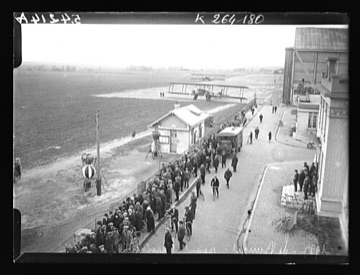
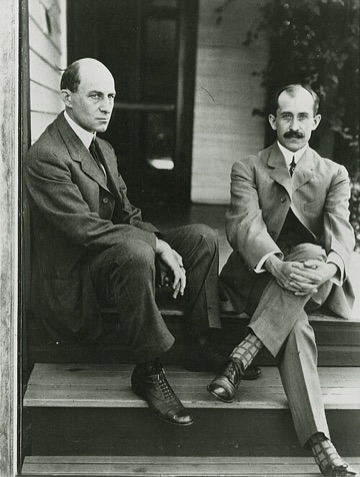
At on 17 December 1903, flew a wood-and-muslin aircraft 36.6 metres. Sixteen aircraft trace what came after, all the way to a helicopter on Mars. Read how each one changed flying, then take it up yourself in 3D, with its real weight, wing area and power.

Start the timeline

1903 – 2021 · 16 aircraft · one flight simulator

Time
T+00:12
Distance
36.6 m
Ceiling
3 m
Top speed
48 km/h
First flight, 1903 36.6 m Boeing 747 wingspan 59.6 m Airbus A380 wingspan 79.8 m 020406080
Drawn to the same scale. The whole first flight would fit under the wing of a 747.

A century of speed

Top speed of each aircraft on this page. The scale is logarithmic: each gridline is ten times faster than the one below.

101001,00010,000km/h1900192019401960198020002020 Mach 1 at altitudeWright FlyerBell X-1North American X-15ConcordeIngenuity
3/6

Formula 1 car · ≈ 370 km/h10 of 16 aircraft here are faster than a Formula 1 car (≈ 370 km/h).

1903

Wright Flyer 1903 Flyer

Twelve seconds, thirty-seven metres

10 m · person 1.75 m · behind it, the A380 at the same scale

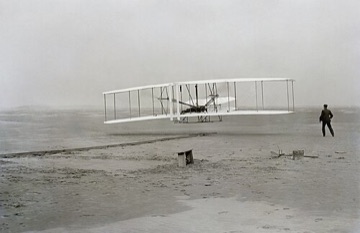
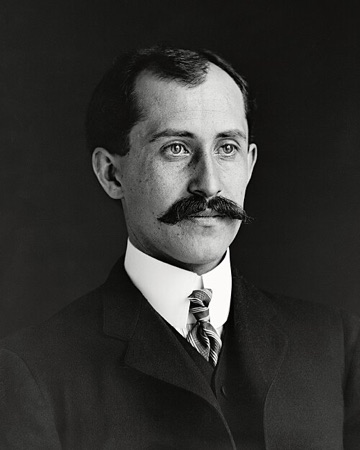
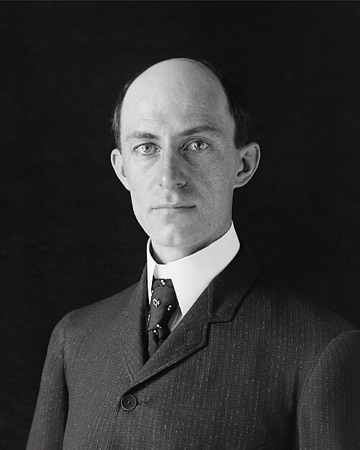
flew first, into a headwind of about 40 km/h, for 12 seconds and 36.6 m. took the fourth flight of the day to 59 seconds and 259.7 m. What made it work was control: the pilot lay in a hip cradle, and shifting it to roll the aircraft. later replaced the twist, but every aircraft since has rolled by changing the lift on one wing against the other.

How the Flyer rolled. Shift the hip cradle and the cables twist one pair of wingtips up and the other down, so one wing lifts more than the other.
Top speed
48 km/h
Wingspan
12.3 m
Max weight
341 kg
Ceiling
3 m
Range
260 m
In 12 seconds
160 m
Power
12 hp four-cylinder engine
101001,00010,000 km/h
The full story

On displayNational Air and Space Museum, Washington, D.C.
1909

Blériot XI Channel-crossing aircraft

The sea is no longer a border

10 m · person 1.75 m · behind it, the A380 at the same scale

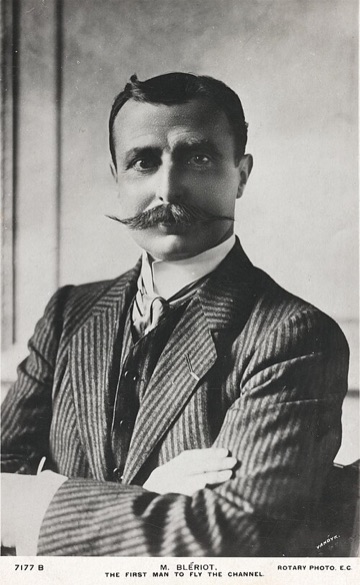
crossed the English Channel in 36 minutes with no compass, following the ships below until he saw the cliffs of Dover. The tractor propeller at the front, the single wing and the tail at the back set the layout most light aircraft still use.

How the Blériot steered. The stick ends in a bell on a universal joint, with cables from its rim to the wings and the tail. Push the stick left and the right wing's trailing edge is pulled down, so that wing lifts and the aeroplane rolls left. The ancestor of every joystick.
Top speed
76 km/h
Wingspan
7.8 m
Max weight
300 kg
Ceiling
1,000 m
Range
60 km
In 12 seconds
253 m
Power
25 hp Anzani three-cylinder
101001,00010,000 km/h
The full story
1917

Sopwith Camel F.1

Built to turn

10 m · person 1.75 m · behind it, the A380 at the same scale

The engine, fuel, guns and pilot were packed into the first two metres of the fuselage, and the spinning pulled the nose hard to the right. It was unforgiving to learn and brilliant in a dogfight, and it shot down more enemy aircraft than any other Allied fighter of the war.

Why the Camel turned like nothing else. The crankshaft is bolted to the airframe and everything else spins: nine cylinders, the crankcase and the propeller, about 170 kg turning at 1,250 rpm. That spinning mass snapped the Camel into right turns; the scale reads the torque it puts on the airframe.
Top speed
185 km/h
Wingspan
8.5 m
Max weight
659 kg
Ceiling
6,400 m
Range
485 km
In 12 seconds
617 m
Power
130 hp Clerget rotary
101001,00010,000 km/h
The full story
1927

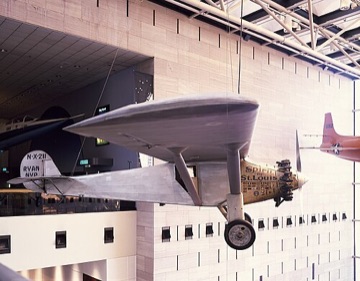
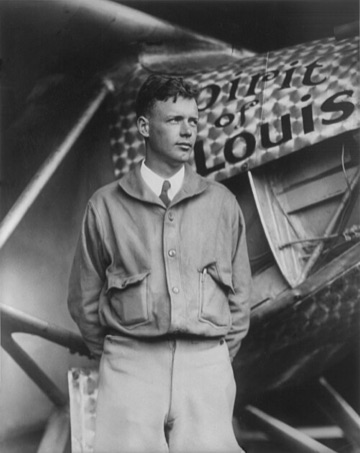
Spirit of St. Louis Ryan NYP

33½ hours alone over the Atlantic

10 m · person 1.75 m · behind it, the A380 at the same scale

had the fuel tank put in front of the cockpit, so he could not see straight ahead and used a periscope. He flew 5,800 km nonstop to and won the $25,000 .

How Lindbergh saw ahead. The main fuel tank filled the fuselage in front of him, so there was no windscreen. Slide the periscope out of the left wall and its mirror clears the skin and looks forward past the tank.
Top speed
214 km/h
Wingspan
14 m
Max weight
2,330 kg
Ceiling
4,975 m
Range
6,600 km
In 12 seconds
713 m
Power
223 hp Wright J-5C Whirlwind
101001,00010,000 km/h
The full story

On displayNational Air and Space Museum, Washington, D.C.
1936

Douglas DC-3 DC-3 airliner

Flying starts to pay

10 m · person 1.75 m · behind it, the A380 at the same scale

It first flew 32 years to the day after the . The DC-3 was the first airliner that could make money carrying only passengers, and by 1939 it carried 90 percent of the world's airline traffic. More than 16,000 were built, and some still fly.

How the DC-3 changed gear. The three blades turn together in their hub. At fine pitch each blade takes a small bite of air, for a strong pull at takeoff. At coarse pitch it takes a big bite, so the engine can turn slower in cruise. A protractor on the top blade reads the angle.
Top speed
370 km/h
Wingspan
29 m
Max weight
11,430 kg
Ceiling
7,100 m
Range
2,400 km
In 12 seconds
1.2 km
Power
2 × 1,200 hp Pratt & Whitney Twin Wasp
101001,00010,000 km/h
The full story

On displayNational Air and Space Museum, Washington, D.C.
1939

Heinkel He 178 Prototype V1

The first jet

10 m · person 1.75 m · behind it, the A380 at the same scale

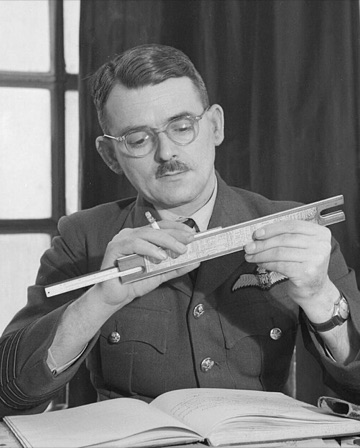
's HeS 3 engine sucked air in at the nose, compressed it, burned fuel in it and blew it out of the tail. The flight lasted about six minutes. had filed a patent for the same idea in Britain in 1930. Within thirty years the had replaced the piston engine on almost every large aircraft.

How the first jet breathed. Open the throttle and the impeller flings air outward, the burners set it alight, and the hot gas spins a turbine on the same shaft before it leaves the nozzle as a jet.
Top speed
600 km/h
Wingspan
7.2 m
Max weight
2,000 kg
Ceiling
—
Range
200 km
In 12 seconds
2 km
Power
HeS 3B turbojet, 4.4 kN
101001,00010,000 km/h
The full story
1947

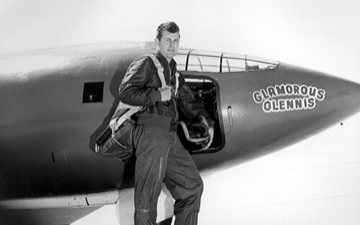
Bell X-1 Glamorous Glennis

Through the sound barrier

10 m · person 1.75 m · behind it, the A380 at the same scale

Dropped from a B-29 bomber, lit the four rocket chambers and reached 1.06 at 13,000 m, the first piloted level flight faster than sound. The fuselage was shaped like a .50 calibre bullet, because bullets were known to stay stable above Mach 1.

How the X-1 was throttled: it wasn't. Each of the pilot's switches lights another chamber, so thrust climbs in four steps of about 6.7 kN, burning alcohol and liquid oxygen.
Top speed
1,540 km/h
Wingspan
8.5 m
Max weight
5,560 kg
Ceiling
21,900 m
Range
—
In 12 seconds
5.1 km
Power
XLR11 rocket, 27 kN
101001,00010,000 km/h
The full story

On displayNational Air and Space Museum, Washington, D.C.
1958

Boeing 707 707-320B shown

The jet age reaches passengers

10 m · person 1.75 m · behind it, the A380 at the same scale

The 707 halved journey times and made crossing an ocean a matter of hours, not days. Its and engines hung on pylons below them set the shape of almost every airliner since.

Why airliners lean their wings back. Sweep the wing and the air meets its leading edge at a slant, so it can fly closer to the speed of sound before shock waves form and drag climbs.
Top speed
1,000 km/h
Wingspan
44.4 m
Max weight
151,300 kg
Ceiling
12,500 m
Range
9,300 km
In 12 seconds
3.3 km
Power
4 × Pratt & Whitney JT3D turbofans, 80 kN each
101001,00010,000 km/h
The full story
1964

SR-71 Blackbird SR-71A

Faster than a rifle bullet

10 m · person 1.75 m · behind it, the A380 at the same scale

The Blackbird cruised above 3 at 25 km, where the sky looks black at noon. Friction heated the titanium skin past 300 °C, so the panels fitted loosely on the ground and sealed only in flight. On its last flight in 1990 it went from Los Angeles to Washington in 64 minutes and is now at the 's Udvar-Hazy Center.

How the Blackbird swallowed Mach 3. Below Mach 1.6 the inlet spike stays locked forward. Above it the spike slides back as speed rises, 66 cm (26 in) by Mach 3.2, keeping the shock waves where the inlet can slow the air below the speed of sound before it reaches the engine.
Top speed
3,540 km/h
Wingspan
16.9 m
Max weight
78,000 kg
Ceiling
25,900 m
Range
5,400 km
In 12 seconds
11.8 km
Power
2 × Pratt & Whitney J58, 145 kN each with afterburner
101001,00010,000 km/h
The full story

On displaySteven F. Udvar-Hazy Center, Chantilly, Virginia

1967

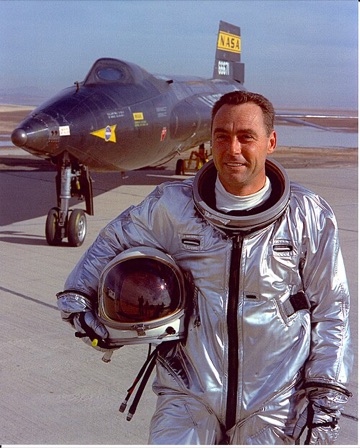
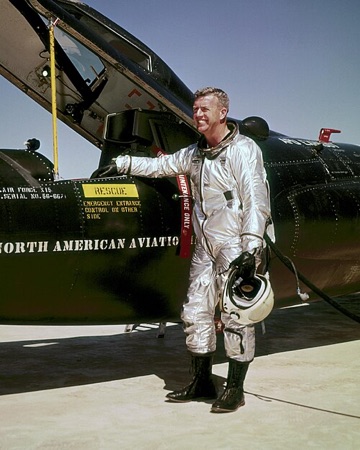
North American X-15 X-15A-2

The edge of space

10 m · person 1.75 m · behind it, the A380 at the same scale

The X-15 rode up under the wing of a B-52 and was dropped at 13,700 m before its rocket lit. On 3 October 1967 flew the rebuilt X-15A-2 to 7,274 km/h, 6.7, still the record for a crewed, powered aircraft; the heat burned away the dummy slung under its tail. In 1963 had taken the third X-15 to 107,960 m, above the , where there is too little air for wings, so small rockets in the nose and wingtips steered it.

How the X-15 steered where the air ran out. Push the hand controller sideways and a thruster at each wingtip puffs, one up and one down, and the airframe rolls on its gimbal stand.
Top speed
7,274 km/h
Wingspan
6.8 m
Max weight
25,460 kg
Ceiling
107,960 m
Range
450 km
In 12 seconds
24.2 km
Power
XLR99 rocket, 254 kN
101001,00010,000 km/h
The full story

On displayNational Air and Space Museum, Washington, D.C. (the first X-15)
1969

Boeing 747 747-100

Flying for almost everyone

10 m · person 1.75 m · behind it, the A380 at the same scale

Its wingspan alone, 59.6 m, is longer than the ' first flight. The 747 carried twice as many people as the 707, and the lower cost per seat made long-haul travel affordable for millions. The hump on top was there so it could be turned into a freighter with a nose that swung open.

How the 747 slows to land. Three flap segments roll back and down on their tracks, and the slots that open between them let air from under the wing sweep over the top of each one.
Top speed
955 km/h
Wingspan
59.6 m
Max weight
333,400 kg
Ceiling
13,700 m
Range
9,800 km
In 12 seconds
3.2 km
Power
4 × Pratt & Whitney JT9D turbofans, 193 kN each
101001,00010,000 km/h
The full story
1976

Concorde Production Concorde

Supersonic, for a while

10 m · person 1.75 m · behind it, the A380 at the same scale

Concorde crossed the Atlantic in about three and a half hours at twice the speed of sound. Because of the time difference, passengers landed in New York earlier by the clock than they had left London. Fuel costs, noise and the kept it to 14 aircraft in airline service, and it retired in 2003. One is at the Udvar-Hazy Center.

Why the nose bends. At Mach 2 the visor shields the windscreen from the heat; below Mach 1 it slides down. At 5° the pilots can see to taxi and take off, and at 12.5° they can see the runway past the long nose on a nose-high landing.
Top speed
2,180 km/h
Wingspan
25.6 m
Max weight
185,070 kg
Ceiling
18,300 m
Range
7,220 km
In 12 seconds
7.3 km
Power
4 × Rolls-Royce/Snecma Olympus 593, 169 kN each with reheat
101001,00010,000 km/h
The full story

On displaySteven F. Udvar-Hazy Center, Chantilly, Virginia

1989

Northrop B-2 Spirit Spirit Stealth Bomber

No tail, no shadow on the radar

10 m · person 1.75 m · behind it, the A380 at the same scale, both seen from above

Eighty years after set the standard layout of nose, wing and tail, the B-2 threw the fuselage and tail away. A pure flying wing has almost no vertical surfaces to bounce radar waves back to an antenna, giving this 170-tonne bomber the radar signature of a small bird. Because it has no tail to keep it straight, it is aerodynamically unstable: adjust the control surfaces hundreds of times a second to keep it in the air.

How a tailless wing turns. The B-2 has no fin. Near each wingtip the trailing edge splits along one hinge line, the upper half rising and the lower half dropping, up to 45° each. The drag of the open surface pulls that wingtip back, and the nose swings toward that side.
Top speed
1,010 km/h
Wingspan
52.4 m
Max weight
170,600 kg
Ceiling
15,200 m
Range
11,000 km
In 12 seconds
3.4 km
Power
4 × General Electric F118-GE-100 turbofans, 77 kN each
101001,00010,000 km/h
The full story
2007

Airbus A380 A380-800

The largest airliner ever built

10 m · person 1.75 m · the largest airliner, at the scale of every card

Two full decks run the length of the fuselage, certified for up to 853 passengers. Each of its four Rolls-Royce Trent 970 engines makes about 70 times the thrust of the first . The does most of the work: most of the air it moves goes around the engine core, not through it.

A Rolls-Royce Trent 970, the A380's engine, on a ground-run thrust frame with part of its casing cut away. Drag the lever and the three spools wind up at their own speeds; most of the air the fan moves leaves as a cold bypass jet around the core. Press Space for a take-off run.
Top speed
945 km/h
Wingspan
79.8 m
Max weight
575,000 kg
Ceiling
13,100 m
Range
15,000 km
In 12 seconds
3.2 km
Power
4 × Rolls-Royce Trent 970, 310 kN each
101001,00010,000 km/h
The full story
2011

Boeing 787 Dreamliner 787-8

Built from plastic, flexed like a bird

10 m · person 1.75 m · behind it, the A380 at the same scale

Half of the 787 by weight is , not aluminium. The wings flex upward by several metres in flight, and the lighter structure and newer engines burn about 20 percent less fuel than the aircraft it replaced. Because composite does not corrode, the cabin can also be kept more humid.

How far a carbon wing can bend. Load the 787's wing past its limit and the actuators haul the tip up the post, about 7.6 m at 150%, as in the 2010 ultimate-load test.
Top speed
945 km/h
Wingspan
60.1 m
Max weight
227,930 kg
Ceiling
13,100 m
Range
13,530 km
In 12 seconds
3.2 km
Power
2 × GEnx-1B or Trent 1000, about 280 kN each
101001,00010,000 km/h
The full story
2021

Ingenuity Mars Helicopter

Powered flight on another world

10 m · person 1.75 m · behind it, the A380 at the same scale

The air on Mars is about one percent as dense as on Earth, so Ingenuity's two 1.2 m rotors spin at around 2,500 rpm to lift 1.8 kg. It was meant to make five flights and made 72. Under its solar panel it carried a piece of fabric from the 1903 Wright Flyer, about the size of a postage stamp.

How to fly in air a hundredth as thick. Two rotors spin opposite ways on one mast so their torques cancel, and near 2,800 rpm their lift passes the craft's 6.7 N Mars weight and it lifts off the stand.
Top speed
36 km/h
Wingspan
1.2 m
Max weight
2 kg
Ceiling
24 m
Range
17 km
In 12 seconds
120 m
Power
Solar-charged batteries, about 350 W in flight
101001,00010,000 km/h
The full story

Airspeed km/h
0
Mach 0000°Altitude m
0
Climb 0 m/s
Throttle0%

WS throttle↑↓ pitch←→ rollC cameraM soundR restart