64 years after the first twelve seconds
North American X-15 X-15A-2
The edge of space
The story
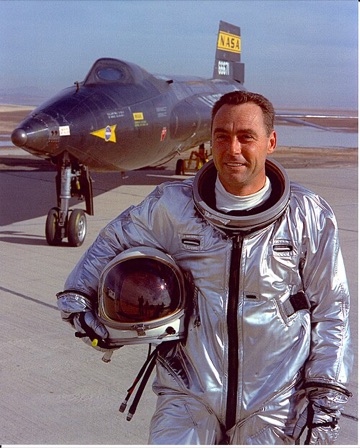
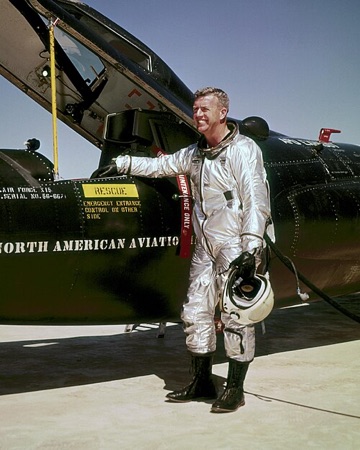
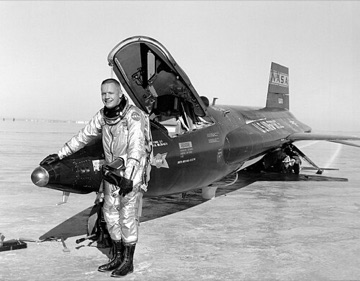
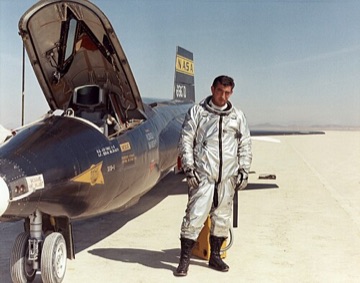
The X-15 rode up under the wing of a B-52 and was dropped at 13,700 m before its rocket lit. On 3 October 1967 flew the rebuilt X-15A-2 to 7,274 km/h, 6.7, still the record for a crewed, powered aircraft; the heat burned away the dummy slung under its tail. In 1963 had taken the third X-15 to 107,960 m, above the , where there is too little air for wings, so small rockets in the nose and wingtips steered it.
Three X-15s flew 199 times between 1959 and 1968. After the drop the pilot had about 80 to 120 seconds of rocket burn, then glided back without power to land on skids on the dry lakebed at about 320 km/h. Eight of its pilots earned astronaut wings, and flew it seven times before he went to the Moon.
The programme paid for its lessons. In November 1967 was killed when the third X-15 went into a spin at hypersonic speed and broke up. What the X-15 taught about heat-resistant structures, steering by rocket and flying back from space went into the Space Shuttle.
How it works
Loading the 3D model…
Specifications
- Top speed
- 7,274 km/h
- Wingspan
- 6.8 m
- Max weight
- 25,460 kg
- Ceiling
- 107,960 m
- Range
- 450 km
- In 12 seconds
- 24.2 km
- Power
- XLR99 rocket, 254 kN
Where it flew
Over Edwards, California, after launch from a B-52
Over Rogers Dry Lake, Edwards. The simulator starts here, over today's ground and imagery of the place.
Fly it yourself
Take the North American X-15 up in 3D, with its real weight, wing area and power.
Light the rocket, pull up and pass Mach 5: hypersonic.
On displayNational Air and Space Museum, Washington, D.C. (the first X-15)